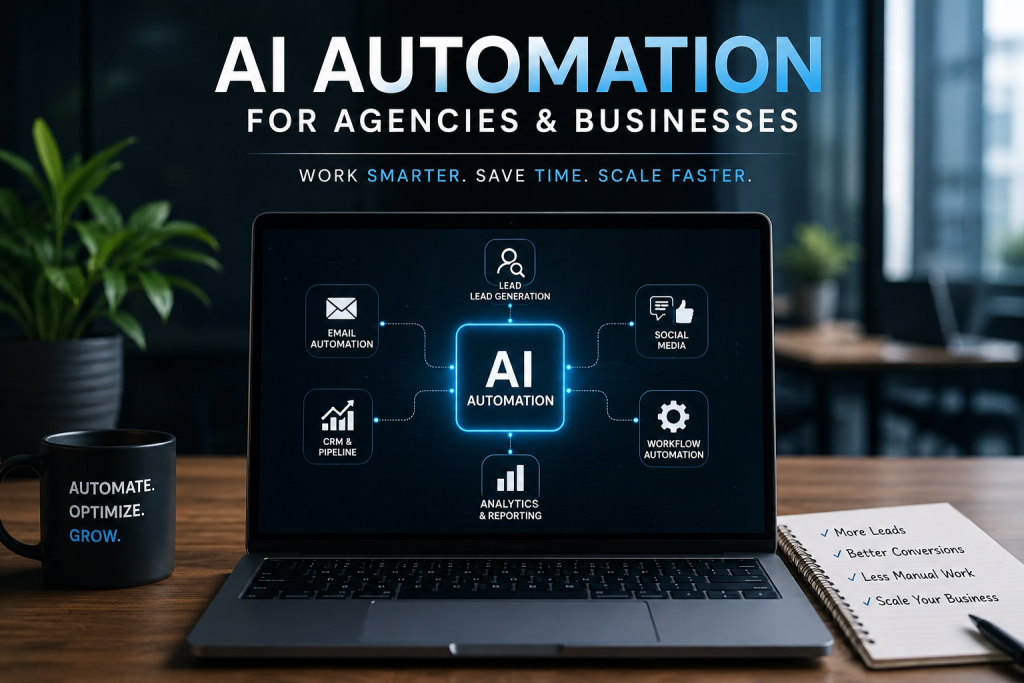
Most agencies still run lead gen the same way they did five years ago: a founder or an SDR scrapes a list, sends the same cold email to everyone on it, and manually checks a spreadsheet for replies. It works, barely, and it caps how much pipeline you can build without hiring more people.
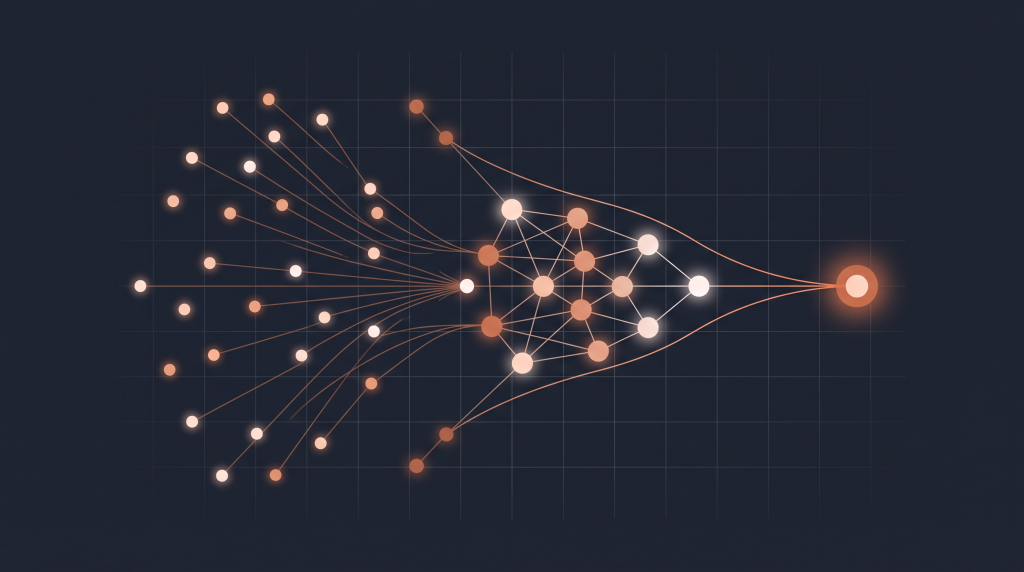
AI changes the constraint. Instead of a person doing every step, you build a system that finds prospects, qualifies them, and drafts outreach — and a human only steps in for the conversations that are actually worth having. This is the playbook we use to set that up.
Why manual lead gen breaks first
The bottleneck is never “not enough leads.” It’s the three steps between a name on a list and a booked call:
- Research — figuring out if this company/person is even a fit
- Personalization — writing an opener that isn’t obviously copy-pasted
- Qualification — sorting real interest from a polite “not now”
Every one of those is repetitive, pattern-based work — which is exactly what AI is good at removing.
The four-stage AI lead gen workflow
1. Sourcing — build the list once, refresh it automatically
Define your ICP (industry, company size, tech stack, hiring signals) and connect a data source — Apollo, Clay, or a similar enrichment tool — to pull a fresh list on a schedule instead of a one-off export. Trigger: new companies matching your ICP criteria. Action: enrich with firmographic + contact data. Output: a always-current prospect list, no manual scraping.
2. Research & personalization — one prompt, every prospect
For each prospect, an AI step pulls recent signals — a job posting, a funding round, a website change, a LinkedIn post — and drafts a one-line personalized opener referencing it. This is the single highest-leverage swap: it turns “Dear Sir/Madam” outreach into something that reads like you actually looked at their company, at zero incremental time cost per lead.
3. Outreach — sequenced, not blasted
Route the enriched, personalized list into a sequencing tool (Instantly, Smartlead, or your CRM’s native sequences) with 3–5 touches over 10–14 days. Each touch should escalate the ask, not repeat it: value → proof → direct ask → break-up email.
4. Qualification — let AI triage replies before a human sees them
Replies get classified automatically: interested, objection, wrong person, not now, unsubscribe. Only “interested” and “objection” (which often means they’re engaged but unsure) land in front of a human. This is what actually saves time — not the sending, the sorting.
What this replaces
A founder or SDR spending 10+ hours a week on research and first-draft outreach. Once built, the system runs on its own; the human time shifts entirely to the calls that are already qualified — which is the only part of lead gen that has to be a human anyway.
Where to start if you’re building this from scratch
Don’t automate all four stages at once. Start with sourcing + personalization — that’s the highest-effort, most repetitive pair, and the easiest to validate. Once the list quality and reply rate look right, layer in automated sequencing and reply-triage. Build once, reuse for every campaign after.
The bottom line
Agencies that scale lead gen in 2026 aren’t the ones with the biggest SDR team — they’re the ones who turned the repeatable 80% of the process into a system, and kept humans for the 20% that needs judgment. If your pipeline depends entirely on someone’s Tuesday afternoon, it’s not a system yet — it’s a task.